The honest answer is that the improvements that add the most value are usually the modest ones, and the ones that cost the most usually add the least. That is not an opinion; it is the consistent finding of national recoup data year after year, and it matters more in a luxury market like Dallas because buyers here are comparing your home against the best-presented resale in your ZIP code, and in Frisco, Southlake, and Trophy Club, against brand-new construction. In a market where condition has become a pricing variable, knowing which improvements pay for themselves is the difference between adding value and quietly subsidizing a buyer's renovation.
Here is what the current data says about which improvements actually add value, and how to apply it to your property.
What the Market Is Telling Us Right Now
The luxury tier continues to outperform the rest of the housing market, which is exactly why condition deserves your attention. Through mid-2026, the million-dollar-plus segment was roughly flat to up about 3.5 percent year over year while starter and mid-tier homes declined, with the DFW million-dollar median running near $1.62 million (M&D Real Estate, DFW market data, 2026). The demand base beneath that tier, fed by relocating executives, in-market move-up buyers, and investors, remained deep.
What has changed is choice. Inventory has normalized upward across the premier Dallas ZIPs, and buyers are exercising it. In Preston Hollow, days on market has run the longest of the Dallas luxury corridors, roughly 61 days in the April 2026 reading, with homes between $2 million and $4 million averaging 45 to 75 days and estates above $4 million stretching to 90 days and beyond (Dallas Luxury Market Report, April 2026). Southlake's inventory rose about 21 percent year over year while its pace stayed quick (Southlake luxury market data, 2026). Highland Park closed the third quarter near a $2.995 million median, up 4.2 percent year over year, on characteristically thin inventory (NTREIS, Q3 2026).
Read together, those signals describe a market where a well-presented home still leads its ZIP code, and an under-presented one now competes against a larger pool of polished alternatives. That is the environment in which improvement spending either earns its keep or quietly leaks value.
The 2026 Recoup Data, Ranked
The 2026 Cost vs. Value report from Zonda Media and Remodeling magazine tracks the share of each project's cost that a seller typically recovers at resale. The pattern has been consistent for years, and the luxury segment is where it shows up most sharply.
The projects that recoup the most are almost all exterior and curb-appeal replacements. Garage door replacement recoups about 268 percent, the top project two years running; steel entry door replacement about 216 percent; and manufactured stone veneer about 208 percent (2026 Cost vs. Value Report).
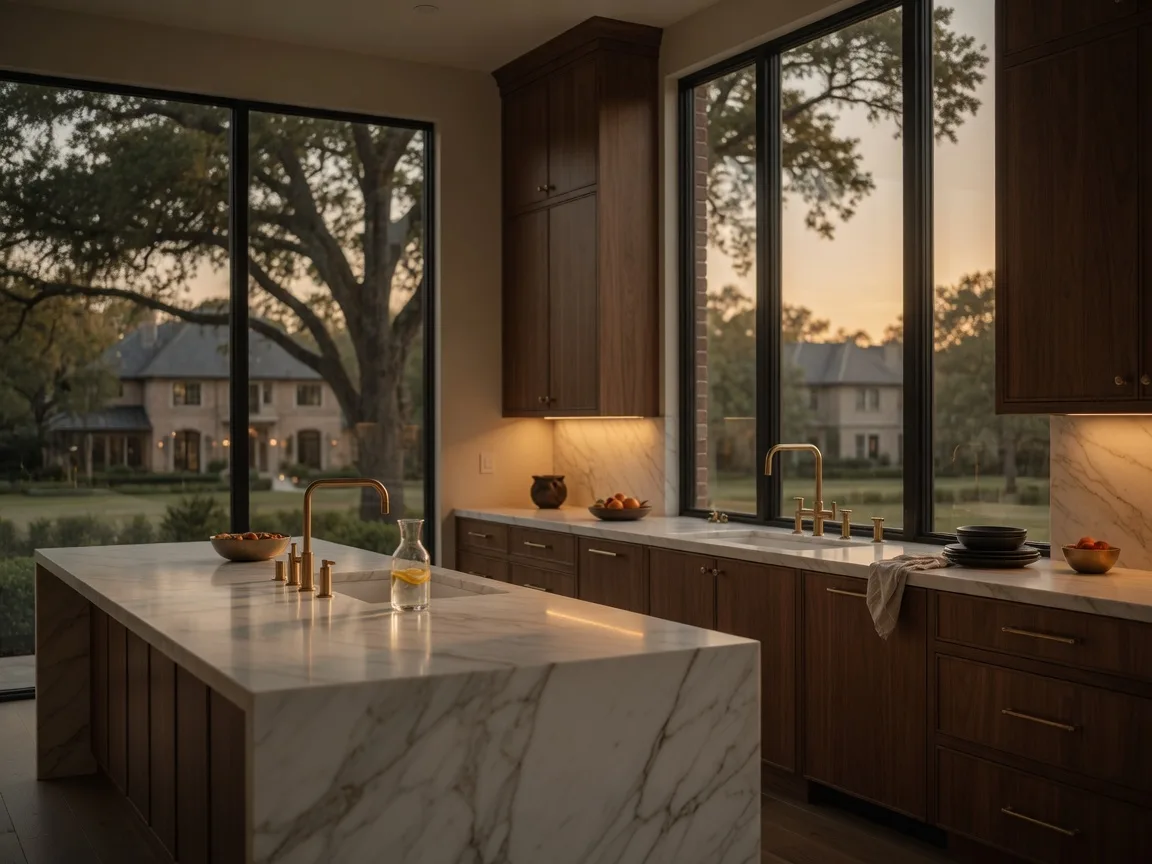
The interior projects that earn their keep are the modest, functional ones. A minor, midrange kitchen remodel recoups 113 percent, the highest-returning interior project in the report, and a midrange bathroom remodel recoups 80 percent.
The projects that recover the least are the expensive, personalized luxury overhauls. An upscale bathroom remodel recoups about 42 percent, a major upscale kitchen remodel about 36 percent, an upscale bathroom addition 36 percent, a midrange primary suite addition 32 percent, and an upscale primary suite addition roughly 18 percent (2026 Cost vs. Value Report).
The lesson is counterintuitive and worth sitting with: a modest, well-executed kitchen refresh routinely returns more than a hundred cents on the dollar, while a $350,000 upscale primary suite addition recovers roughly eighteen cents. Luxury buyers reward universality, not personal taste. They will pay for a kitchen that reads as fresh and functional; they will not reimburse you for the custom build you designed around your own life.
ZIP Code by ZIP Code: Where Improvement Dollars Matter Most
The recoup data is national, but where you deploy improvement dollars in Dallas should be decided ZIP code by ZIP code, because each market prices condition differently.
Highland Park. The benchmark market is structurally supply-constrained, and well-positioned homes still sell in their strongest window. The risk here is not finding a buyer; it is the original-condition discount. In a market where inventory is thin and demand is deep, the improvement that pays is meeting the neighborhood standard on day one, then letting scarcity do the work.
University Park. This is a high-cash, high-discretion market, with more than half of luxury buyers paying cash in the early 2026 readings (University Park Luxury Real Estate Market Update, January 2026). Cash buyers scrutinize condition directly, and the spread between a teardown lot and a finished renovation, measured in millions, is the market's own pricing of condition. Improvement dollars here are best spent on the visible, finished details buyers can see before they ever tour.
Preston Hollow. This is where improvement spending has the most leverage. The corridor runs the longest days on market, and original-condition estate homes carry a heavy discount because buyers price in the unknown cost of updating, often $100 to $250 per square foot for cosmetic-to-moderate work. A targeted refresh that removes that uncertainty is worth far more here than a speculative addition.
Southlake, Frisco, and Trophy Club. These corridors pair resale inventory directly against active new construction. A dated kitchen or an original primary bath is measured against a brand-new equivalent down the street, so the comparison is immediate and visible. In these markets the refresh decision is less optional, and the kitchen-and-curb-appeal spend is where the return concentrates.
What to Do, What to Skip
Distilled to a decision framework, the data points in one clear direction:
Do spend where buyers look first and where risk is removed. Deferred maintenance and mechanicals, roof, HVAC, electrical, plumbing, and water heater, are non-negotiable; inspectors find them and buyers negotiate against them. High-visibility refreshes, kitchen counters, backsplash, cabinet hardware, primary-bath fixtures, fresh paint, flooring, and landscaping, are the highest-leverage zone in the recoup data. Curb appeal, front door, garage door, lighting, and landscape, tops the national list and is the cheapest way to shape a buyer's first impression.
Skip the expensive personalization. Full upscale renovations, additions, and pools recover the smallest share of cost at resale. If the improvement would not appeal to the broadest pool of qualified buyers in your price range, it is a consumption decision, not an investment decision. That is reasonable if you plan to stay; it is a mistake if you are positioning a sale.
What This Means for You
For most luxury sellers in Dallas, the improvement question is not about doing more; it is about doing the right things in the right order, and letting the evidence in your ZIP code decide. The homes that sell at or near their target price are the ones that meet their neighborhood's condition standard without overbuilding into their own taste. That is a decision best made with the numbers in front of you, not in a contractor's showroom.
If you would like a data-driven view of which improvements your home would benefit from, and which would quietly cost you at sale, I would welcome the opportunity to walk through the analysis with you. Clarity creates confidence, and the numbers are where the decision starts.
Data Referenced
- Zonda Media / Remodeling magazine, 2026 Cost vs. Value Report, national cost-recouped averages.
- M&D Real Estate, DFW Real Estate Market 2026.
- NTREIS closed-sale data for Highland Park, Q3 2026.
- Dallas Luxury Market Report (Natalie Hatchett), April 2026.
- University Park Luxury Real Estate Market Update, January 2026.
- Southlake and Frisco luxury market data, 2026.
Figures are drawn from publicly available reporting as of October 2026 and are dated in each reference. Market conditions change; contact Jana Fariss for the most current data and a personalized analysis for your property.
Powered by Meridian Residential Intelligence™, our proprietary market analytics platform identifies market shifts, luxury opportunities, and emerging trends before they become obvious to the broader market. Helping clients make smarter decisions across Dallas and Oklahoma City.
Let's look at what the market is telling us about your home.
A strategy consultation includes a ZIP-level analysis of which improvements add value, and which quietly cost you at sale.
Schedule a Strategy Session