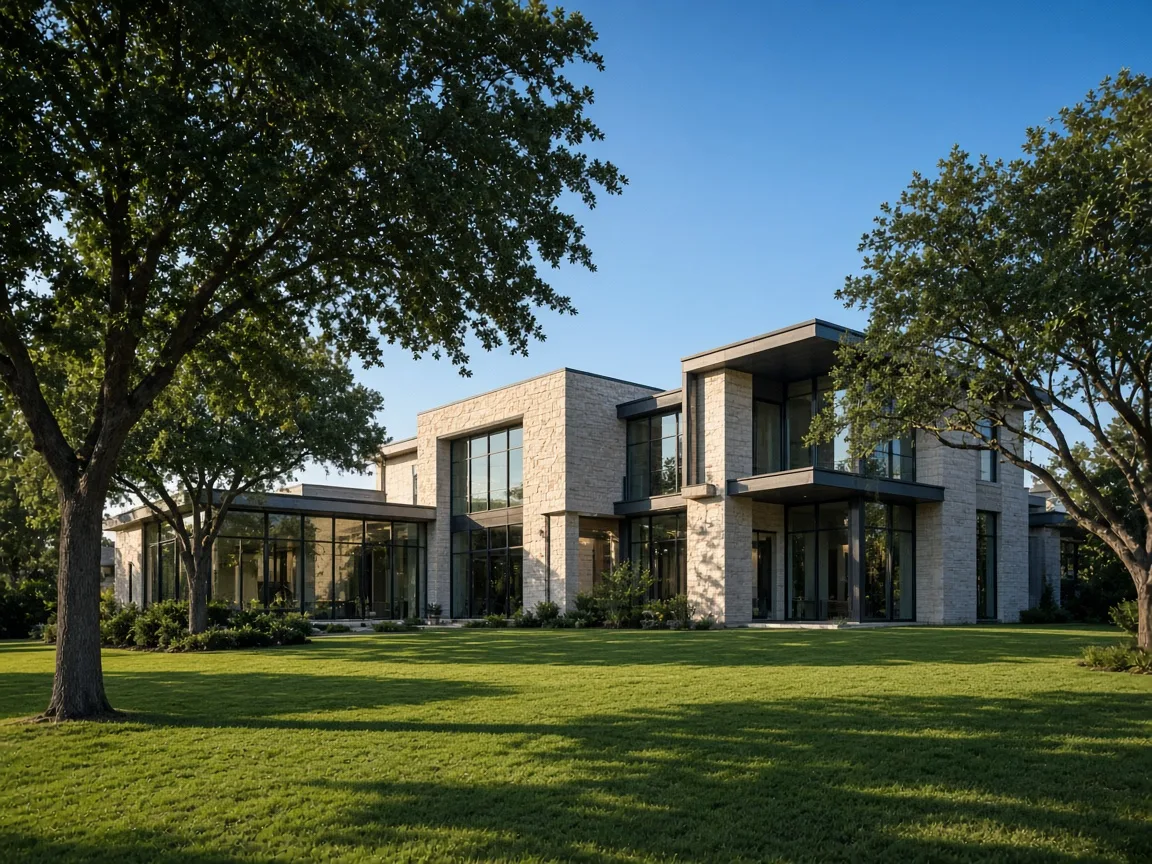
When a luxury seller asks what their home is worth, they are usually really asking which of its attributes the market will pay for, and which it will not. That distinction matters, because in a luxury market value is not a single number. It is the sum of several distinct factors, each carrying different weight in different ZIP codes, and the smartest sellers understand that weight before they set a price or spend a dollar on improvements.
Here is what the current data says about the factors that actually determine luxury home value across Dallas right now, and how to think about them for your property.
The Drivers, in the Order They Matter
Across the Dallas luxury market, the evidence points to a clear hierarchy. Location and ZIP code dominate everything else. School district follows closely, because in markets like the Park Cities the school system is part of what the address itself is worth. Land, lot size, and privacy separate a house from an estate, and it is the estate tier, above roughly $5 million, where acreage and seclusion carry the heaviest weight. Architecture and provenance come next, then condition and move-in readiness, and finally amenities and lifestyle. Understanding the order matters: it tells you where the value in your property already sits, and which levers are worth pulling before a launch.
Texas recorded roughly 14,400 sales above $1 million in 2025, a record, and Dallas luxury continues to outperform the wider region, yet the pace of demand has become more selective. Pendency across the luxury tier slowed from the 10 to 15 days seen in 2021 and 2022 to roughly 27 to 48 days by mid-2026 (Briggs Freeman, North Texas Luxury Market Outlook, January 2026). Buyers are still paying for the same core attributes. They are simply weighing them more carefully, which is why precision about what your home's value is actually built on has never mattered more.
Location Is the Dominant Factor, and It Is Not Close
No amount of renovation moves a property more than the ZIP code it sits in, and the data makes that unmistakable. Highland Park has reclaimed the top spot among the hottest DFW and Texas luxury markets, with a typical home value near $3.0 million as of September 2026 (Zillow, cited by WFAA). University Park sits just behind it near $2.5 million. The gap between these enclaves and the corridor markets is not a condition gap; it is a location premium that resets the value conversation before a single comparable is opened.
The center of gravity in North Texas luxury is also shifting. Frisco and Southlake have become primary destinations for affluent buyers, and Southlake in particular reads as a near-built-out market where resale carries most of the activity. That northward shift does not diminish the Park Cities premium. It just means the strongest ZIPs now span a wider geography, and the correct comparison set for your home depends entirely on which submarket you are actually in.
School District, Land, and Privacy Are the Next Layers
In the Park Cities, Highland Park ISD is repeatedly cited as a primary driver of long-term property value and resale, and it is part of why the premium has proven durable across cycles. For families and for the relocation buyers who weigh districts heavily, the school system is priced into the address, not into the square footage.
Above that, lot size and privacy begin to separate the ordinary luxury home from the estate. Preston Hollow's most notable product is the wooded, acre-scale lot; the estate pocket north of the core, around 75220, trades at multiples of the corridor's overall median precisely because of land and seclusion. In Southlake, homes on 1.5 acres or more closed at a median near $3.96 million at roughly $672 per square foot in late 2026, against roughly $345 per square foot in the $1 million to $2 million tier (The Agency Dallas, Southlake and Westlake luxury report). The value is in the ground, not the structure, and that distinction shows up plainly in the per-square-foot numbers.
Architecture, Condition, and Amenities Complete the Picture
Architecture and provenance matter most at the very top of the market, where the most expensive Dallas homes compete on design, scale, security, and cultural value rather than raw square footage. Below that tier, condition and move-in readiness carry the weight. Demand is strongest for updated, move-in-ready homes, which absorb quickly, while prime lots hold their value for buyers who intend to build. In a more selective market, the home that arrives show-ready earns the pricing advantage, and the home that arrives needing work concedes it at the negotiating table.
Amenities and lifestyle round out the picture: pools, terraces, outdoor living, and proximity to dining, shopping, parks, and schools all reinforce value, but they reinforce it, they do not create it. A pool cannot substitute for a weak location, and in the current market no amenity rescues a property that is priced or presented out of step with its ZIP.
What the ZIP-Level Numbers Show Right Now
The current data makes the hierarchy concrete. Highland Park led on price per square foot, with 12-month closings near $3.9 million at about $826 per square foot, and Town of Highland Park sales for January through August running up about 7 percent year over year (The Agency Dallas; Selden Tual, 2026). University Park posted the strongest median-price growth in the region, with January through August sales up about 24 percent year over year at roughly $2.85 million and price per square foot up about 10 percent (The Agency Dallas).
Preston Hollow is the clearest illustration that ZIP-level reading matters. The corridor as a whole traded near $1.07 million, up about 13 percent year over year, with price per square foot roughly flat near $345. The estate submarkets are a different story entirely, with the north luxury pocket and Preston Hollow East carrying far higher medians on land and scale. A seller who reads only the corridor median will undervalue an estate, and a seller who reads only the estate pocket will overprice a renovation project on a standard lot. The value is set by the specific submarket, not by the ZIP's headline number.
Northwest Dallas offers the most accessible entry point, with medians near $925,000 and price per square foot up modestly year over year, and value driven primarily by location and condition rather than land. Frisco shows what new construction competition does to resale value: the citywide median sits near $650,000 with price per square foot down, while the luxury tier above $1.5 million held near a $2.0 million median at roughly 33 days on market but carried about 6.3 months of supply, a buyer-leaning inventory picture (Bailey Kemps Nelson Group, November 2026). Southlake remains balanced and resale-driven, with the broader ZIP near $1.39 million and the luxury tier near $2.5 million. Trophy Club and Roanoke provide the corridor's value entry, with Trophy Club luxury listings near $875,000 and Roanoke closer to $500,000.
How Do You Use This to Make a Smarter Decision?
The practical version of the answer is this. Before you set a list price, spend on improvements, or decide whether to sell at all, identify which of the value drivers your property actually leads with. If you own an estate lot in Preston Hollow or a half-acre-plus in Southlake, the land is the asset, and the strategy is to let it lead. If you own a move-in-ready Park Cities home, condition and presentation are your levers. If your property sits in a corridor where resale competes with new construction, position on value against the new product, not against the address.
The point is not that one factor always wins. It is that value is a ranked set of factors, and the ranking differs by ZIP code. The sellers who get the best outcome are the ones who understand which attributes the market in their specific subarea is actually paying for, and who build their pricing and presentation strategy around that understanding rather than around a single headline number.
If you would like to know which value drivers the market is currently rewarding in your specific ZIP code, and how to position your property around them, I would welcome the chance to walk through the analysis with you. Clarity creates confidence, and the data is the place to start.
Data Referenced
- Briggs Freeman Sotheby's International Realty, North Texas Luxury Market Outlook: 2025 recap and 2026 outlook, January 2026.
- The Agency, Dallas chapter of The Red Paper 2026 Mid-Year Report.
- Zillow Home Value Index for Highland Park and University Park, September 2026, as cited by WFAA.
- The Agency Dallas, Highland Park Housing Market Report 2026.
- The Agency Dallas, University Park Housing Market Report 2026.
- The Agency Dallas, Preston Hollow Housing Market Report 2026.
- The Agency Dallas, Southlake and Westlake Luxury Homes in 2026.
- Selden Tual, Highland Park and University Park Real Estate Guide 2026.
- Bailey Kemps Nelson Group, Frisco homes $750K and up market report, November 2026 (NTREIS data).
- Realtor.com, Northwest Dallas neighborhood housing market, 2026.
- Redfin and Direct List (NTREIS) data for Frisco, Southlake, and Trophy Club, 2026.
- The Rosen Group Dallas, on the Preston Hollow discount to the Park Cities as a lot-size trade, 2026.
Figures are drawn from publicly available reporting as of November 2026 and are dated in each reference. Sources cover different boundaries, tiers, and time windows, so figures can vary; contact Jana Fariss for the most current data and a personalized value analysis for your property.
Powered by Meridian Residential Intelligence™, our proprietary market analytics platform identifies market shifts, luxury opportunities, and emerging trends before they become obvious to the broader market. Helping clients make smarter decisions across Dallas and Oklahoma City.
Let's look at what the market is telling us about your home's value.
A strategy consultation includes a ZIP-level value analysis built on current supply, recent closed sales, and the drivers buyers are paying for in your specific subarea, so you can position your property with confidence.
Schedule a Strategy Session