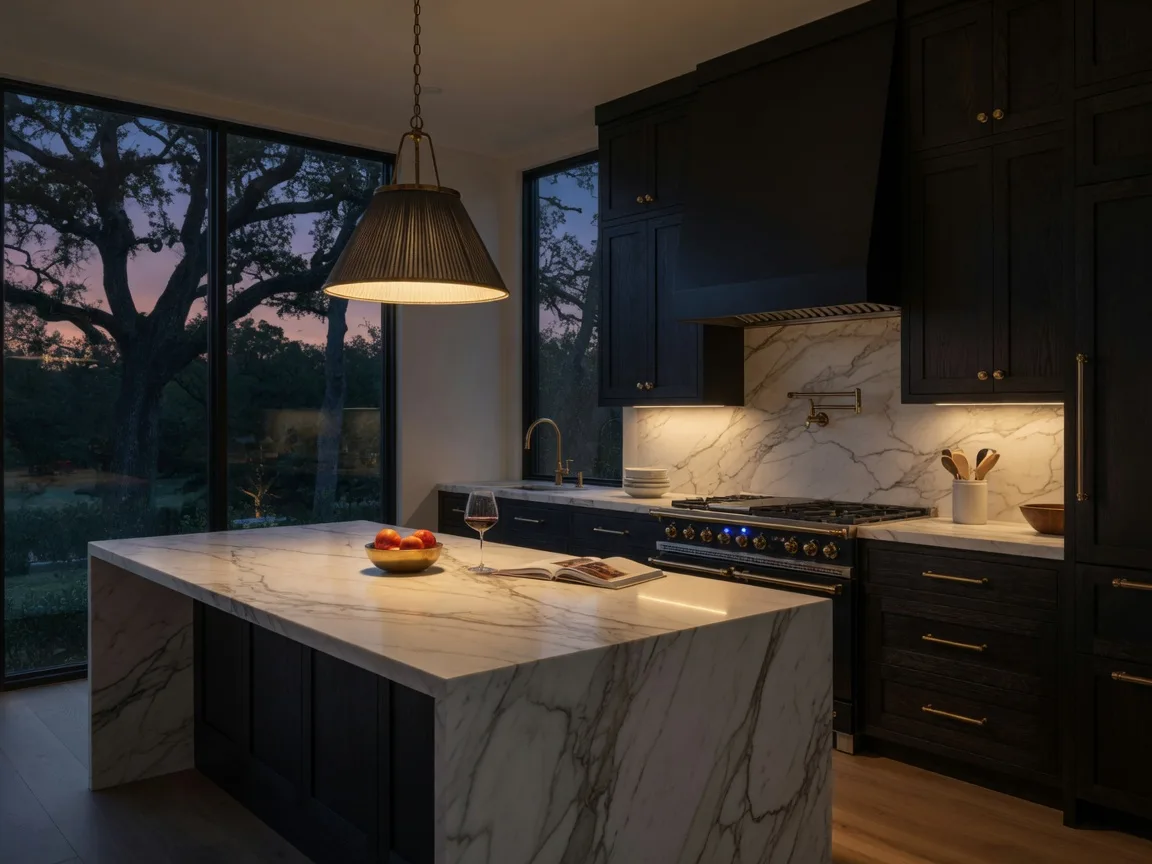
The short answer is that most luxury sellers should renovate selectively, and very few should renovate extensively. The longer answer is that the decision has nothing to do with what you love about your home and everything to do with what the evidence in your ZIP code says buyers actually pay for condition. In a market where roughly one in five Dallas-area listings carries a price reduction, condition has become a pricing variable, not a footnote.
Here is what the current market data says about renovation before sale, and how to make the call for your specific property.
What the Market Is Telling Us Right Now
The 2026 Dallas luxury market is more balanced than it has been in years, and balance changes the renovation math. Across ten premier Dallas ZIP codes, luxury inventory held near 2.4 months of supply in April 2026 with a median of 42 days on market (Dallas Luxury Market Report, April 2026). That is not a scarcity market. Buyers have choices, and they are exercising them.
Two signals matter most for sellers. First, roughly 20 to 21 percent of active DFW listings carried a price reduction through mid-2026, and price reductions reached a yearly high nationally in September 2026 (Realtor.com September Housing Report; Wedgewood Homes, 2026). Second, the resale market has been recalibrating while new construction has held firmer pricing, particularly along the northern corridors (Scribner DFW Market Brief, September 2026).
Read together, those signals describe a market where buyers compare your home against the best-presented resale in your neighborhood and, in Frisco, Southlake, and Trophy Club, against brand-new construction. Condition is now part of the pricing equation, which means the renovation question deserves a data-driven answer, not a gut feeling.
The Renovation Math Most Sellers Get Wrong
The national data is consistent and it contradicts most renovation advice. Modest, functional updates add value. High-end, personalized projects recoup poorly.
Minor and midrange kitchen remodels have recouped roughly 96 to 113 percent of cost in recent Cost vs. Value reporting, while upscale kitchen remodels recoup only about 38 to 54 percent. Midrange bathroom remodels recoup roughly 67 to 83 percent; upscale primary-bath remodels about 42 to 48 percent. Swimming pools typically recoup 40 to 60 percent, and the weakest project in the 2024 report, an upscale primary-suite addition, recouped roughly 24 cents on the dollar (Cost vs. Value Report, 2024 and 2025 editions).
The Dallas market follows the same pattern with local numbers. Kitchen updates running $40,000 to $120,000 typically recoup about 70 to 90 percent here, and targeted pre-sale updates return roughly $2 to $4 for every $1 invested. Full luxury renovations of a 3,000 to 4,000 square foot home, by contrast, run $200,000 to $400,000 and up, and the return is rarely proportionate (Dallas renovation guidance, 2026).
ZIP Code by ZIP Code: What the Evidence Says About Condition
The most useful evidence is local, because each luxury ZIP prices condition differently. University Park is the clearest illustration. In January 2026, renovated historic homes averaged about $3.95 million, up 7.4 percent year over year, while traditional estates of 5,000-plus square feet averaged about $4.62 million and full post-2020 renovations sold for roughly $3.7 million to $4.2 million. Raw teardown lots traded around $2.1 million to $2.3 million (University Park Luxury Real Estate Market Update, January 2026). The spread between a teardown lot and a completed renovation is the market's own pricing of condition, and it is measured in millions.
Preston Hollow shows what a condition gap looks like in the data. Median sale prices run roughly $2.2 million to $2.5 million, with days on market ranging from the mid-40s to the low 80s depending on the source and the reporting period (Redfin and neighborhood market data, 2026). That is the widest market-time range of the core luxury ZIPs, and it tracks closely with condition: original-condition homes from the 1920s through the 1970s are discounted heavily because the unknown cost of updating, roughly $100 to $250 per square foot for cosmetic-to-moderate work, reads as risk to buyers.
Highland Park is the market where positioning compounds fastest. Median sale prices ranged from about $2.3 million to $4.1 million depending on the reporting window and mix, and well-positioned homes have been selling in roughly two to six weeks (Redfin and Movoto, 2026). In a supply-constrained benchmark market, the homes that sell quickly are the ones that meet the neighborhood's condition standard on day one.
Frisco, Southlake, and Trophy Club carry a different dynamic. Active new construction competes directly with resale inventory, so a dated kitchen or an original primary bath is measured against a brand-new equivalent down the street. In these corridors, the refresh decision is less optional than it is in the Park Cities, because the comparison buyer makes is immediate and visible.
A Decision Framework, Not a To-Do List
Rather than a renovation checklist, use a three-tier framework built on the evidence:
Tier one: deferred maintenance and mechanicals. Non-negotiable. Roof, HVAC, electrical, plumbing, water heater. Buyers and inspectors find these, and they negotiate against them. This work rarely wins a premium, but skipping it reliably costs you one.
Tier two: high-visibility refreshes. The highest-leverage zone. Kitchen counters, backsplash, cabinet hardware, primary-bath fixtures, fresh paint, flooring, and curb appeal. This is the $2 to $4 per $1 territory, and it is where most luxury sellers should concentrate their budget.
Tier three: full renovations and additions. Usually the wrong move pre-sale. You pay retail, the buyer values the result at wholesale, and taste-specific work narrows the buyer pool. The data is unambiguous here: the projects with the most personal appeal have the weakest returns.
The decision rule that ties the tiers together: renovate to close the gap between your home and the standard of your ZIP code, never to personalize. The market pays for condition, not for taste.
The Question That Matters More Than the Renovation
Before spending a dollar, ask whether your home is priced to its current condition or whether the condition is holding the price back. In a balanced market, an unrenovated home priced to the evidence can sell on schedule, and a renovated home priced above the evidence will not. Sometimes the smartest move is no renovation at all: price to condition, let the buyer do the work, and capture the discount in the sale price.
The market pays for condition one of two ways, through your renovation or through your price. The strategic question is which path produces the better net result for you, and that answer lives in the spread between renovated and unrenovated sales in your specific ZIP code, divided by the cost and the time of the work.
What This Means for You
For most luxury sellers in Dallas, the honest read is this: selective, evidence-based updates still pay; extensive, taste-driven renovations usually do not. The homes that sell at or near their target price are the ones whose condition matches their ZIP code's standard, and whose price matches their condition. That alignment is exactly what a structured analysis of your property should establish before you commit a single dollar to construction.
If you would like a ZIP-level condition analysis, a look at the renovated-versus-unrenovated spread in your neighborhood, and a recommendation on where renovation dollars would actually pay, I would welcome the opportunity to walk through it with you. Clarity creates confidence, and the evidence is the place to start.
Data Referenced
- Cost vs. Value Report, 2024 and 2025 editions (Remodeling / JLC): national renovation return data.
- Dallas Luxury Market Report (Natalie Hatchett / Compass), April 2026: ten-ZIP luxury supply and days on market.
- Realtor.com September Housing Report, 2026: national price-reduction trend.
- Wedgewood Homes, DFW Real Estate Trends, 2026: share of DFW listings carrying price reductions.
- Scribner DFW Market Brief, September 2026: resale recalibration and new-construction pricing.
- University Park Luxury Real Estate Market Update, January 2026: renovated-versus-unrenovated pricing spread.
- Redfin and Movoto housing market data for Highland Park, University Park, and Preston Hollow, 2026.
- Dallas-area renovation guidance and brokerage commentary, 2026: Dallas kitchen-update and full-renovation cost ranges.
Figures are drawn from publicly available reporting as of October 2026 and are dated in each reference. Market conditions change; contact Jana Fariss for the most current data and a personalized analysis for your property.
Powered by Meridian Residential Intelligence™, our proprietary market analytics platform identifies market shifts, luxury opportunities, and emerging trends before they become obvious to the broader market. Helping clients make smarter decisions across Dallas and Oklahoma City.
Let's look at what the market is telling us about your home.
A strategy consultation includes a ZIP-level condition analysis: the renovated-versus-unrenovated spread in your neighborhood, and where renovation dollars would actually pay.
Schedule a Strategy Session