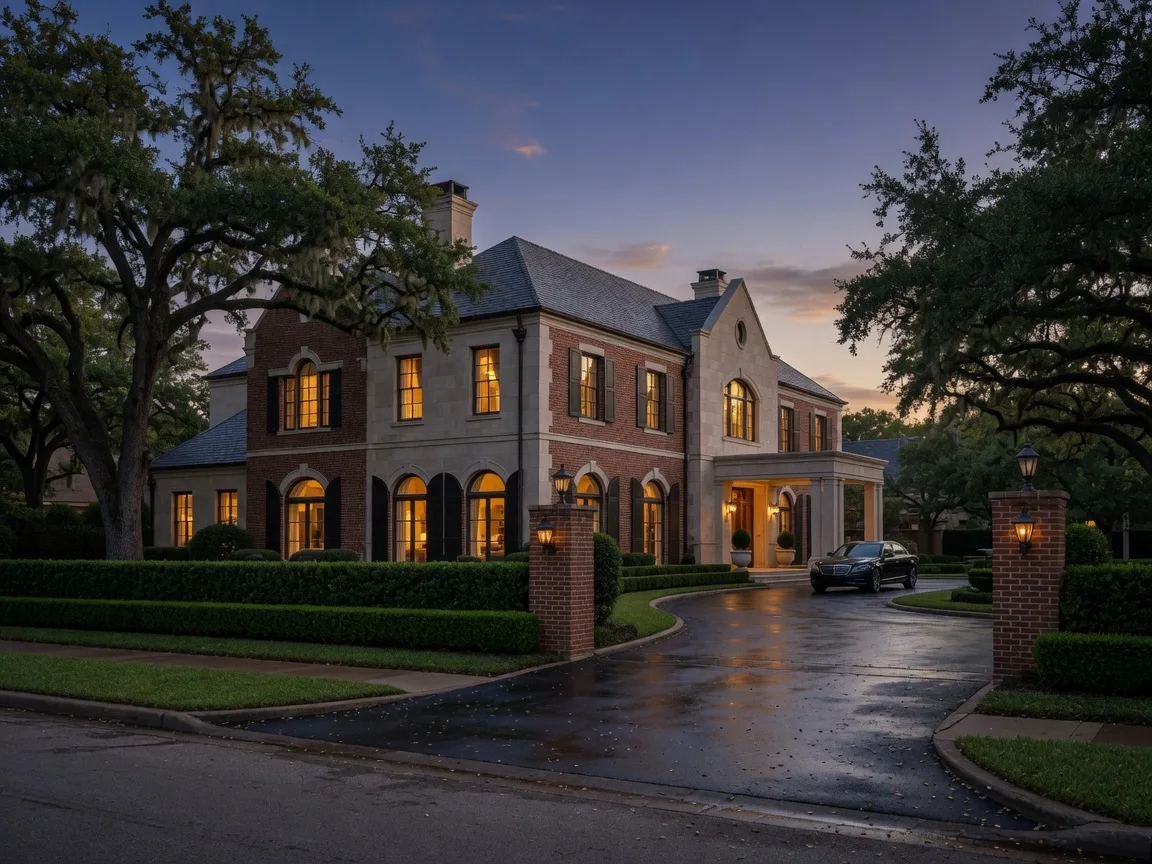
The pricing decision is the most consequential choice a luxury seller makes, because it determines who sees the home, how quickly they act, and what they ultimately offer. In today's Dallas market, the evidence is clear: homes priced to the evidence sell in weeks, while homes priced above it accumulate market time and typically settle below what a disciplined launch would have returned. The number on the listing is not a wish; it is a positioning decision that the market reads instantly.
Here is what the current data says about pricing across the premier Dallas luxury ZIPs, and how to set a price that gives you the strongest position from day one.
What the Data Says About Dallas Luxury Pricing Right Now
The Dallas luxury market is balanced, and balance changes the pricing math. Homes priced at $1 million and above carried roughly 4.8 months of supply through the summer 2026 window, up from about 2.4 months in spring 2026 (Dallas Luxury Market Report, April 2026; DFW brokerage data, August 2026). That is not a weak market; it is a normalized one, and in a normalized market buyers are more selective and pricing errors are more visible.
Consider the closing data. In the July 18 to August 17, 2026 window, 138 Dallas homes closed above $1 million at a median sale price of roughly $1.7 million (The Agency Dallas, 2026). Across DFW in the third quarter, sellers received about 95% of their original list price, and the broader luxury tier closed near 97.4% of asking with only about 11.5% of sales coming in over list (Briggs Freeman Sotheby's International Realty, Q3 2026). The message underneath those numbers: buyers are paying for value, but they are not paying for aspirational pricing.
ZIP Code by ZIP Code: What the Evidence Shows
The right price for your home is set by what closed in your specific subarea, not by a metro-wide average. The ZIP-level picture across Dallas tells distinct stories, and each one carries a different pricing discipline.
Highland Park. The benchmark market remains supply-constrained and demand is strong: median days on market fell from 54 to 38 year over year, and June 2026 closings of 50 beat June 2025's 43 (Redfin, 2026). The 75205 corridor showed price per square foot up 12.2% year over year to about $849 (Compass Park Cities report, April 2026). At the same time, the spread between the median list price of roughly $4.9 million and the median sale price near $2.3 million over the trailing three months (Zillow, mid-2026) is a vivid illustration of aspirational pricing lingering while realistic pricing moves. In Highland Park, the homes that transact are priced to the closed sales, not to the legacy of the address.
University Park. The median sale price ran near $2.5 million over the trailing three months, up 4.5% year over year, with price per square foot up 8.8% to about $730 (Redfin, 2026). Homes here averaged roughly 23 days to contract, down from 41 a year earlier, and the market reads as very competitive. When a ZIP is absorbing inventory this quickly, pricing slightly under the evidence can create competition that pushes the final number up; pricing above it simply hands the buyer pool to the next listing.
Preston Hollow. This is where discipline matters most. Sale-to-list ratios ran near 95.5% to 96.8% through early 2026 (Redfin), and days on market ranged from roughly 68 to 81 days in the first quarter before improving to about 40 days by May. The range is wide because Preston Hollow is not one market; it is a collection of subareas with materially different values per square foot. A price built on the wrong comp set is the most common mistake here, and the market time it creates is measurable in weeks.
Frisco, Southlake, and Trophy Club. These corridors price against a visible alternative: new construction. In Frisco's luxury ZIP 75034, the median list price ran near $1 million in spring 2026 while new listings entered closer to $1.3 million, and the median listing sat about 84 days (TCFG Homes, spring 2026). Southlake's median sale price was near $1.39 million for the three months ending June 2026, down 5.8% year over year, yet median days on market tightened to 21, down from 26 (BlueFuse Realty; Wynne Moore, 2026). Trophy Club closed near $822,000 for the three months ending September 2026, up 10.7% year over year, at about 29 days on market with a 97.7% sale-to-list ratio (Redfin, 2026). Where new construction competes, condition and pricing accuracy are the two variables that decide whether your resale captures the buyer or becomes the comparison.
The Measured Cost of Overpricing
The most persuasive argument for disciplined pricing is that overpricing has a documented price. Zillow's research on the price of overpricing found that homes selling almost immediately closed only about 1% below list, homes on market about 56 days sold roughly 5% below list, and homes on market about 324 days sold nearly 12% below list. A home that ultimately sold about 10% below its list price stayed on market roughly five times longer than a home that sold at list (Zillow Research).
The pattern compounds in the luxury tier. An Indiana Association of REALTORS study of 75,000 sales found that listings priced within 1% of their eventual sale price had a 50% chance of going under contract within 1 to 14 days; listings priced 3% to 5% above took 9 to 52 days; and listings priced 9% to 11% above took 19 to 87 days. Concierge Auctions' 2025 Luxury Homes Index found that ultra-luxury homes across the top U.S. markets were often listed up to 25% above market value, sold on average 13% below their initial list price, and took about 319 days to sell, more than five times longer than median-priced homes. Luxury-market analysis in Palm Beach County quantified the same dynamic above $3 million: sellers who eventually reduced price saw a median gap of about $523,000 versus sellers who never reduced, and 112 additional days to contract, while sellers who never repriced went under contract in a median of 34 days (Palm Beach Luxury, 2026).
The national picture confirms the trend is broad, not local. A record 34.2% of sellers cut their list price in February 2026, with an average reduction of about $40,915, or 7.3% (Redfin, 2026). None of this means buyers will not pay for quality in Dallas. It means the price has to be earned by the evidence before the market will accept it, and every day of market time spent above that evidence weakens the position.
How Pricing Works in a Luxury Market
Luxury pricing is different from pricing in a volume market, because the buyer pool is smaller and more deliberate, and because the buyers themselves are usually advised. A few structural realities follow:
The first 30 days are the highest-velocity window. Most serious buyers and their advisors tour new inventory within the first weeks of a listing. If the price is defensible, that window produces showings, offers, or at minimum, a competitive dynamic you can read. If the price is not defensible, the window closes without producing any of those signals, and the home begins accumulating market time.
A price reduction resets the narrative, not the clock. Buyers and their agents see the reduction history. A home that launched high and dropped reads differently from a home that launched correctly from the start, even when the final numbers are identical. In the luxury tier, the difference often matters more than the price itself.
The number is a communication. Luxury buyers evaluate the listing price as a statement about how the seller views the home, the comps, and the market. A price anchored to the evidence signals a serious, well-advised seller. A price anchored to a hope signals a negotiation to be managed.
What This Means for You
The right price for your home is the price the evidence supports in your specific ZIP code, adjusted for your condition, upgrades, lot, and the current supply in your subarea. In this market, that price is also the one most likely to produce a fast, competitive result: recent data across the Dallas luxury ZIPs shows the best days-on-market figures are concentrated among homes priced to the closed sales. A balanced market rewards precision, and precision starts with the number.
If you would like to see how the current closed sales in your neighborhood frame a defensible price for your home, I would welcome the chance to walk through the analysis with you. Clarity creates confidence, and the data is the place to start.
Data Referenced
- Briggs Freeman Sotheby's International Realty, Q3 2026 DFW market analysis, October 2026.
- The Agency Dallas, "Are Million-Dollar Homes Selling in Dallas? What 138 Closings Show," 2026.
- Dallas Luxury Market Report (Natalie Hatchett / Compass), April 2026 edition.
- Redfin housing market data for Highland Park, University Park, and Preston Hollow, 2026.
- Zillow home value and list-versus-sale data for Highland Park, mid-2026.
- Zillow Research, "The Price of Overpricing: How Listing Price Impacts Time on Market."
- Indiana Association of REALTORS, overpricing study of 75,000 sales.
- Concierge Auctions, 2025 Luxury Homes Index.
- Palm Beach Luxury, "The Overpricing Tax," 2026.
- Redfin, "A Record 34% of February Home Sellers Cut Their List Price," 2026.
- TCFG Homes, Frisco luxury market update, spring 2026.
- BlueFuse Realty and Wynne Moore, Southlake luxury market reports, 2026.
- Redfin housing market data for Trophy Club, 2026.
Figures are drawn from publicly available reporting as of October 2026 and are dated in each reference. Sources cover different windows and property subsets, so figures can vary; contact Jana Fariss for the most current data and a personalized pricing analysis for your property.
Powered by Meridian Residential Intelligence™, our proprietary market analytics platform identifies market shifts, luxury opportunities, and emerging trends before they become obvious to the broader market. Helping clients make smarter decisions across Dallas and Oklahoma City.
Let's look at what the market is telling us about your home's price.
A strategy consultation includes a ZIP-level pricing analysis built on recent closed sales, current supply, and market time in your specific subarea.
Schedule a Strategy Session