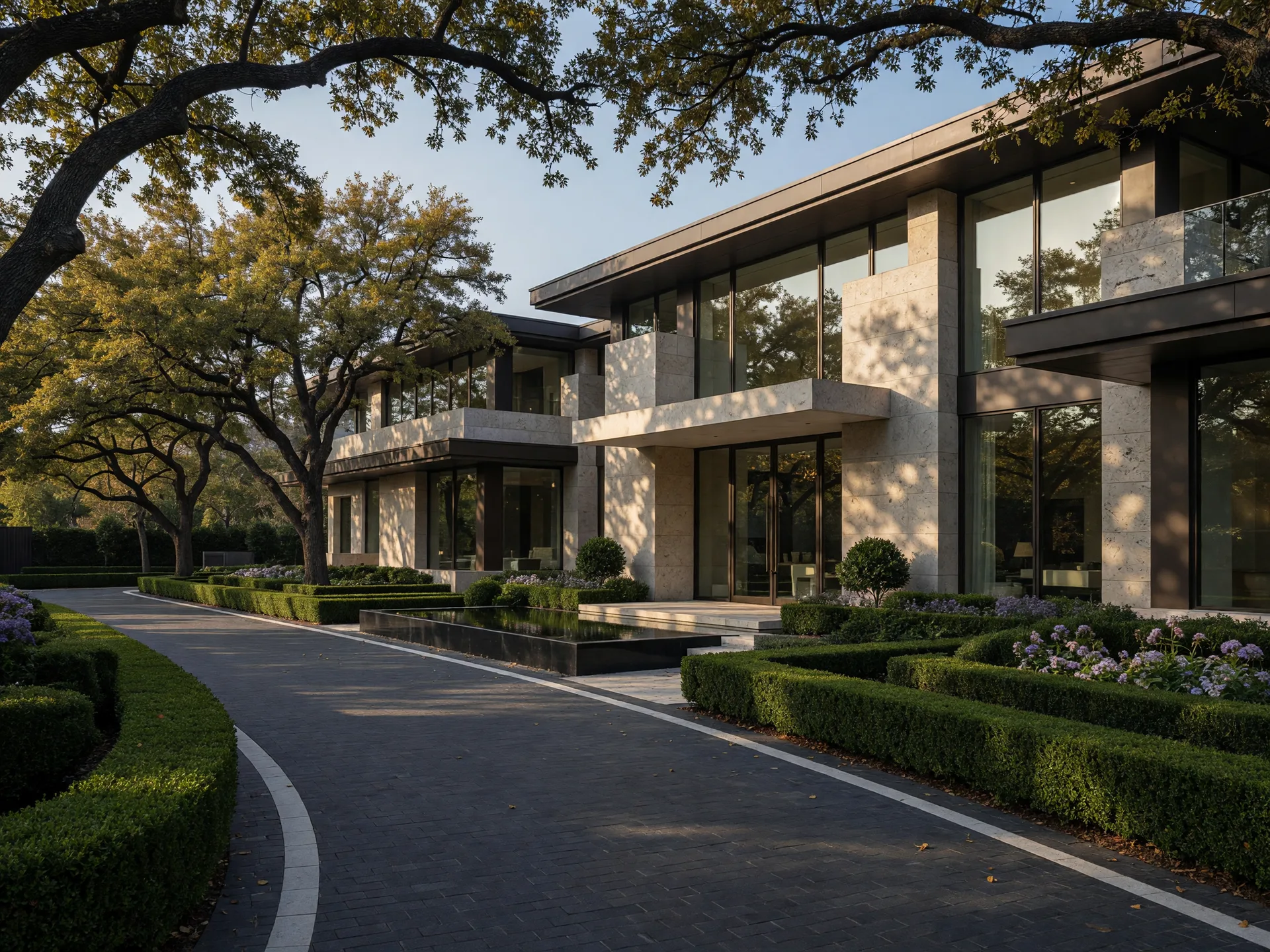
Your home is worth what the most recent evidence in your ZIP code says it is worth, and right now that evidence is telling a more balanced story than many sellers expect. Dallas luxury homes have held value better than the broader market through 2026, appreciating at a pace near 3.5 percent while starter homes have declined (Selden Tual, 2026). But value is no longer rising automatically, and the homes selling at or above their target are the ones priced to what their specific market has already demonstrated.
The honest answer to "how much is my home really worth" is that it is a range, not a single number, and the range is set by recent comparable sales, your condition, and the buyer pool in your neighborhood. Here is what the current data says, ZIP by ZIP, about where Dallas luxury values stand right now.
What the Data Says About Luxury Values Right Now
The broad market is telling sellers two things at once. On one hand, the top of the market is resilient: luxury homes in Dallas have appreciated while lower-priced homes fell, and new D-FW homes were still selling at 97.57 percent of list price in May 2026 (Briggs Freeman Sotheby's / Zonda). On the other hand, the market is far more selective about pricing than it was a few years ago. In February 2026, 47.3 percent of Dallas home sellers had reduced their list price, the third-highest share among the 50 largest U.S. metros, against a national record of 34.2 percent (Redfin, 2026).
Read those two signals together and the pattern is clear. Buyers are still paying for what they believe is genuinely worth the asking price, and they are negotiating hard on everything else. In the Dallas luxury high-rise segment, sellers were receiving about 95 percent of their asking price as of mid-2026 (Dallas Luxury High-Rise Mid-Year Report, 2026). That is not a falling market; it is a market demanding evidence behind every dollar of asking price.
ZIP Code by ZIP Code: Reading the Evidence
Citywide medians will not tell you what your home is worth. The real signal lives at the ZIP level, where each premier Dallas market has its own balance of supply, demand, and price momentum.
Highland Park. The median sale price here was roughly $2.3 million over the three months ending May 2026 (Redfin), down from a higher-mix January reading near $2.85 million, while Zillow's average home value estimate sits near $2.8 million, up about 3.9 percent year over year (Zillow, 2026). Inventory has settled near 42 to 50 active listings with roughly 5.4 months of supply (NTREIS, 2026). The takeaway: values in Highland Park have held, but the price mix shifts month to month, and a home priced to its specific lot, square footage, and condition is the only number that matters for you.
University Park. This has been the strongest of the core Park Cities ZIPs. The median sale price was near $2.5 million over the three months ending May 2026, up about 4.5 percent year over year, with roughly 16 percent of sales closing above asking and price per square foot near $730 (Redfin; Pax Realty, 2026). With days on market in the low 20s, University Park remains the tightest and most competitive of the three core markets. Here, the risk is not finding buyers; it is leaving money on the table by pricing below what the evidence supports.
Preston Hollow. Values here have run ahead of the other core ZIPs on a year-over-year basis, with the median near $2.2 million in February 2026, up roughly 15.6 percent (Redfin), and near $2.4 million by mid-year (Bale Real Estate Group, 2026). But this is also the market where the spread between well-priced and overpriced listings is widest. The trophy and estate tier commonly carries 90 to 180-plus days on market, while the overall ZIP shows roughly 96 active listings (Bale Real Estate Group; Redfin, 2026). The land here holds the value; the pricing has to be supported by the most recent comparable sales, not by what a seller hopes the market will do.
Frisco, Southlake, and Trophy Club. The northern corridors show how much price tier changes the valuation picture. In Frisco's luxury ZIP 75034, the median sale price was near $835,000 with 42 days on market, up about 1.2 percent year over year, even as the broader city median softened (Redfin, 2026). Southlake's median ran between $1.3 and $1.39 million depending on the window, down modestly year over year, with a sale-to-list ratio near 94 percent and inventory up about 21 percent (Redfin; Bluefuse Realty; Wynne Moore, 2026). Trophy Club was the standout appreciation story, with the median near $848,000, up about 30 percent year over year, driven by new development and limited inventory (TK Realty, 2026). In each of these markets, active new construction is the quiet competitor, and it anchors the top of the comparable range for resale value.
Why the Online Estimate Is Not a Value
Automated valuation models are useful for a first read, and they are wrong more often in luxury markets than anywhere else. They run on public records and recent sales; they do not inspect your interiors, measure your lot, weigh the quality of your renovations, or understand what your specific enclave rewards. In a segment where the difference between two neighboring homes can be seven figures, an algorithm that never sets foot on the property is a starting point, not an answer.
This is why the meaningful question is not "what does the estimate say" but "what does the evidence say." The evidence is the set of comparable sales an appraiser and an experienced advisor would both rely on, adjusted for the differences between those homes and yours.
How a Luxury Home's Value Is Actually Determined
A professional appraisal in Texas uses three approaches, with the sales comparison approach carrying the most weight for residential property. The appraiser compares your home to similar recent sales, adjusts for location, size, condition, and features, and arrives at a supported opinion of value (JP Findley Group, 2026). For a $1 million-plus home in the Park Cities, a certified residential appraiser typically relies on only three to five comparable sales, rather than the 15 to 20 used for more common properties, because true comparables are scarce (TALCB; JP Findley Group, 2026).
That scarcity is exactly why luxury value is so sensitive to the quality of the analysis. Custom features rarely have direct comparables, which means professional judgment carries disproportionate weight, and that judgment has to be grounded in the right sales. It is also why financing shapes strategy: jumbo loans above the conforming limit, currently near $766,550, bring their own appraisal and underwriting standards, and an appraisal that comes in below contract price can trigger renegotiation (JP Findley Group, 2026).
The Difference Between Value, Price, and Net Proceeds
Four numbers often get confused, and the distinction decides strategy. Appraised value is what a licensed appraiser's evidence supports. Market value is what an informed buyer will pay. List price is the number you choose to launch with. And net proceeds are what you actually keep after the transaction. In today's Dallas luxury market, the gap between list price and final sale price is wider than it was a few years ago, which means pricing discipline matters more, not less.
The 2026 price-reduction data makes the cost of mispricing concrete. When nearly half of Dallas sellers are reducing their price at some point, the homes that avoid that cycle are the ones whose first number was anchored to the comparable sales from day one (Redfin, 2026). A home that launches high and steps down does not simply sell later; it loses the velocity of the first 30 days and signals to the buyer pool that there is negotiating room. The defensible number, set before the listing goes live, is the most powerful tool a seller has.
What This Means for You
The number that matters is not an estimate and not a hope; it is the range supported by recent comparable sales in your specific ZIP code, adjusted for your lot, condition, and the buyer pool you will actually face. In Highland Park and University Park that range is supported by strong demand. In Preston Hollow it demands discipline against a wider spread. In Frisco, Southlake, and Trophy Club it must be tested against the new construction competing for the same buyer. Every one of those readings is available from current data, and together they answer the question with evidence rather than opinion.
If you would like to know where your home falls in that range, I would welcome the opportunity to build you a valuation analysis from current comparable sales in your ZIP code, the appraiser's evidence standard, and the pricing strategy that follows from it. Clarity creates confidence, and the data is the place to start.
Data Referenced
- Selden Tual, 2026: year-over-year appreciation of Dallas luxury homes versus starter homes.
- Redfin housing market data for Highland Park, University Park, Preston Hollow, Frisco (ZIP 75034), and Southlake, 2026.
- Redfin / CultureMap Dallas, February 2026: share of Dallas sellers reducing list price and the national record share.
- Dallas Luxury High-Rise Mid-Year 2026 Report: average sale-to-list ratio in the Dallas luxury high-rise segment.
- Briggs Freeman Sotheby's / Zonda, May 2026: sale-to-list ratio for new D-FW homes.
- Zillow home value index for Highland Park, 2026.
- NTREIS, 2026: Highland Park inventory and months of supply.
- Pax Realty, 2026: University Park days on market and price per square foot.
- Bale Real Estate Group, 2026: Preston Hollow mid-year median, days on market, and active listings.
- Bluefuse Realty and Wynne Moore, 2026: Southlake median sale price, sale-to-list ratio, and inventory change.
- TK Realty, 2026: Trophy Club median sale price and year-over-year change.
- JP Findley Group and TALCB, 2026: luxury appraisal methodology, comparable count, certification requirements, jumbo loans, and the conforming loan limit.
Figures are drawn from publicly available reporting as of October 2026 and are dated in each reference. Market conditions change; contact Jana Fariss for the most current data and a personalized valuation analysis for your property.
Powered by Meridian Residential Intelligence™, our proprietary market analytics platform identifies market shifts, luxury opportunities, and emerging trends before they become obvious to the broader market. Helping clients make smarter decisions across Dallas and Oklahoma City.
Let's look at what the market is telling us about your home's value.
A strategy consultation includes a ZIP-level valuation analysis built from current comparable sales, the appraiser's evidence standard, and a recommended pricing and positioning plan.
Schedule a Strategy Session