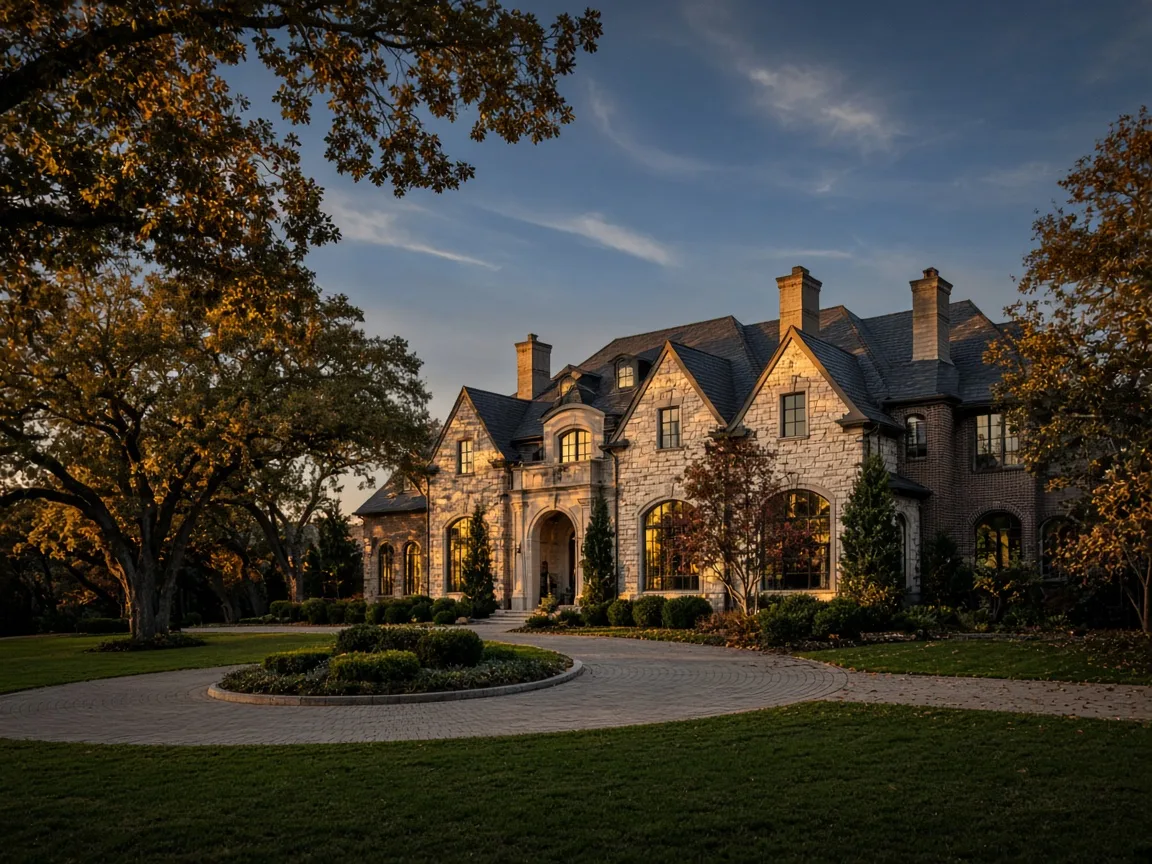
It is one of the first questions almost every luxury seller asks, and the honest answer is that a calendar date rarely decides the outcome. The market rewards the home that is priced to the evidence, presented to its strongest audience, and launched when the supply picture in its ZIP code favors the seller, and those conditions can be present in November just as often as in April. Seasonality is real, but it is a starting point for strategy, not a rule to wait on.
Here is what the current data says about timing across the premier Dallas luxury ZIPs, and how to think about a launch window in this market.
What the Data Says About Timing in Dallas Right Now
Realtor.com's 2026 best-time-to-sell analysis of the Dallas-Fort Worth metro pointed to the week of April 12 through April 18 as the single strongest listing window, with the broader ideal window running from early March through late May. Zillow's read of Dallas-metro closings found that homes listed in that mid-April week sold for roughly $5,700 more, about 1.6% above the seasonal norm, moved about 9 days faster, and drew about 23.5% more buyer views per week (Dallas Morning News, March 2026; Zillow analysis cited by ibuyer.com and CultureMap Dallas). Census and FRED data show the same shape in raw days on market: a metro-wide median of 48 days in May, easing to 62 days by September (FRED/Census, Dallas-Fort Worth-Arlington).
Those are the seasonality baselines. The current market gives them context. In September 2026, Dallas homes over $1 million closed at a median sale price of about $1.4 million, flat year over year, with 455 closed sales, up 14.3% from a year earlier (Norada Real Estate, September 2026 NTREIS data). Across DFW in the third quarter, months of supply ran near 4.3, days on market around 58, and sellers took home about 95% of list price (Briggs Freeman Sotheby's International Realty, Q3 2026). That is a balanced market with genuine buyer activity, and balance changes what timing means.
Why the Luxury Calendar Is Different
The conventional spring peak is built around move-up families, school calendars, and rate-sensitive entry buyers. The luxury buyer pool in Dallas is different: a meaningful share pay cash or carry high equity, many relocate on corporate or personal timelines rather than school schedules, and the decision to move at this price point is driven more by life stage, portfolio strategy, or a specific property than by the month on the calendar. That makes the luxury market more year-round than the market beneath it, and it explains why enclaves like Highland Park and Southlake reliably produce competitive fall and year-end windows for sellers who are positioned well.
Luxury also moves on a slower clock, so the seasonal math compounds differently. Across Dallas, homes over $1 million have averaged roughly 49 to 68 days on market in recent reporting, versus about 30 to 50 days for mid-range homes, and the luxury high-rise segment ran near 110 days at about 95% of asking in mid-2026 (Dallas High-Rise Report, mid-year 2026). When a listing takes two months rather than three weeks to find its buyer, the launch quarter matters more than the launch week, and a fall launch with a full winter of deliberate buyer activity can outperform a rushed spring launch that starts overpriced.
ZIP Code by ZIP Code: Where Timing Matters Most
The right window for your home is set by activity in your specific subarea, not by a metro-wide seasonal curve. The ZIP-level picture across Dallas tells distinct stories, and each one changes the timing math.
Highland Park. The median sale price ran near $3.0 million in the three months ending September 2026, with price per square foot around $883, up roughly 8% to 12% year over year, while median days on market drifted to about 55, versus 36 a year earlier (Redfin, 2026). Sellers who closed between January and August took home about 96.3% of original list price, up from 93.5% in the same period of 2025 (local MLS compilation). The most supply-constrained market in North Texas still rewards well-priced launches, but the buyer is more deliberate than in 2025, and a fall listing here competes against thinner inventory. That is the point of the season.
University Park. The Park Cities overall showed a median near $2.7 million, up 9.2% year over year, at about 50 days on market in the three months ending September 2026 (Redfin). University Park's own 12-month figures through July showed roughly 188 closed sales near $2.5 million in about 19 to 24 days, with 16% of sales coming in over asking (Pax Realty). Homes that sell this quickly are less dependent on the calendar, because the buyer pool for University Park is deep in every season.
Preston Hollow. Median values have held near $2.5 million with sale-to-list ratios in the mid-95% to 97% range, and days on market ran 60-plus in the first quarter before improving to about 40 by May (Redfin; J Caza Realty; The TX Collective Group). Preston Hollow is a collection of submarkets, and here timing is really a pricing and presentation conversation. A disciplined fall launch in a submarket with limited competition can reset the clock in the seller's favor.
Northwest Dallas. The median sale price reached about $865,000, up 4.8% year over year, with median days on market down to about 48 and roughly two offers per home in the three months ending September 2026 (Redfin). Momentum like that is closer to year-round than seasonal, and the evidence argues for launching when the home is ready rather than waiting for the forecast.
Frisco. The citywide median ran near $650,000 over the first half of 2026, down modestly year over year, and in the luxury ZIP 75034, listings sat longer, with homes above $1.5 million taking meaningfully more time than the roughly 40-day citywide pending average (Redfin; TCFG Homes, spring 2026). Where a resale competes against new construction, the season is less forgiving, and launch quality matters more than the month.
Southlake. The median sale price ran near $1.39 million in the three months ending June 2026 with days on market tightening to about 21, while the luxury tier showed its own discipline ladder: a 97.3% sale-to-list ratio from $2 million to $2.5 million, easing to 94.4% above $3.5 million, with market time stretching from 41 to 61 days across those tiers (BlueFuse Realty; January 2026 luxury market update). Southlake is a market where the top segment operates on a different schedule than the tier below it.
Trophy Club. The median closed near $822,000 in the three months ending September 2026, up 10.7% year over year, at about 29 days on market (Redfin). Absorption this strong is an argument for launching when you are ready, not when the calendar looks its most conventional.
Positioning Matters More Than the Month
Here is the strategic version of the answer. The first 30 days of a listing are its highest-velocity window, because that is when the home is new to the market, to the buyer agents who work the ZIP, and to the listing networks that matter. Whether a launch happens in April or in November, pricing and presentation in that opening window decide whether the home generates competition or begins accumulating market time. Recent DFW reporting underscores the point: mispriced homes are the ones taking longer to sell, while well-positioned luxury homes continue to transact (The Real Deal, April 2026).
The strongest argument against waiting for the calendar is that timing is mostly positioning in disguise. A seller who waits from November to April does not gain a different market; they gain a different list of active listings at the exact moment the most competition arrives. In a balanced market running 4.3 to 4.5 months of supply, the sellers with the best results are the ones who launch when their home is ready, priced to the evidence in their ZIP code, and presented to the strongest buyer audience. The calendar is a contributing factor, not the decision.
What This Means for You
The best time to list your luxury home is not a single month; it is the window in which your market position is strongest, and that window is set by supply, comparable activity, and your home's readiness, not by the season alone. In today's balanced Dallas market, well-positioned homes are selling year-round, and the fall through year-end stretch offers thinner competition in exactly the ZIPs where it matters. If you are weighing a winter launch against a spring launch, the analysis worth doing is the one on your specific subarea: what is currently competing, what has closed, and what the next 90 days of supply look like. That is the part of timing the data can answer.
If you would like to see how the current supply and closed sales in your neighborhood frame a launch window for your home, I would welcome the chance to walk through the analysis with you. Clarity creates confidence, and the data is the place to start.
Data Referenced
- Realtor.com, 2026 Best Time to Sell study for Dallas-Fort Worth, as reported by The Dallas Morning News, March 2026.
- Zillow analysis of Dallas-metro closing data, as reported by ibuyer.com and CultureMap Dallas, 2026.
- U.S. Census Bureau / FRED, median days on market, Dallas-Fort Worth-Arlington metro, 2026.
- Norada Real Estate, Dallas housing market report, September 2026 (NTREIS/MLS data).
- Briggs Freeman Sotheby's International Realty, Q3 2026 DFW market analysis, October 2026.
- Redfin housing market data for Highland Park, University Park, Preston Hollow, Northwest Dallas, Frisco, Southlake, and Trophy Club, 2026.
- Pax Realty, University Park housing market, 12 months through July 2026.
- Dallas High-Rise Report, mid-year 2026 Dallas luxury high-rise market.
- BlueFuse Realty, Southlake luxury real estate market report, 2026.
- January 2026 Southlake luxury market update (Nitin Gupta DFW).
- TCFG Homes, Frisco luxury market update, spring 2026.
- The Real Deal, "Mispriced Dallas-Fort Worth Homes Are Taking Longer to Sell, Except Luxury," April 2026.
- The TX Collective Group and J Caza Realty, Preston Hollow luxury market trend analyses, 2026.
Figures are drawn from publicly available reporting as of November 2026 and are dated in each reference. Sources cover different windows and property subsets, so figures can vary; contact Jana Fariss for the most current data and a personalized launch-window analysis for your property.
Powered by Meridian Residential Intelligence™, our proprietary market analytics platform identifies market shifts, luxury opportunities, and emerging trends before they become obvious to the broader market. Helping clients make smarter decisions across Dallas and Oklahoma City.
Let's look at what the market is telling us about your launch window.
A strategy consultation includes a ZIP-level timing analysis built on current supply, recent closed sales, and market time in your specific subarea, so you can choose a launch date with confidence.
Schedule a Strategy Session